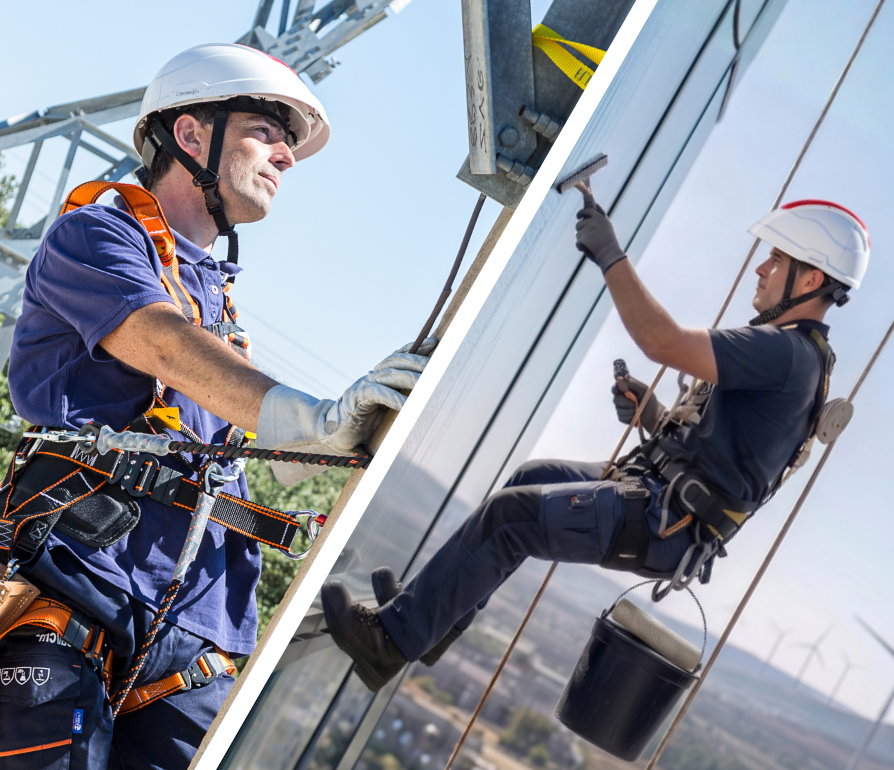
Working at height: understanding the regulations, choosing the right PPE and ensuring safety during operations.
Before gearing up, it is essential to recall the hierarchy of prevention measures for temporary working at heights. Safety is always considered in a strict order of priority :
Access rules and working conditions : Work stations at heights must be safely accessible. The means of access must take into account the frequency of passage, the height and the duration of the intervention. It must guarantee suitable ergonomics, allow for the rapid rescue of a worker in difficulty and ensure their evacuation.
Warning : It is strictly forbidden to work at heights if the weather or environmental conditions compromise safety. Any intervention must be preceded by a risk assessment (electrical, mechanical, etc.) and the total securing of the work area.
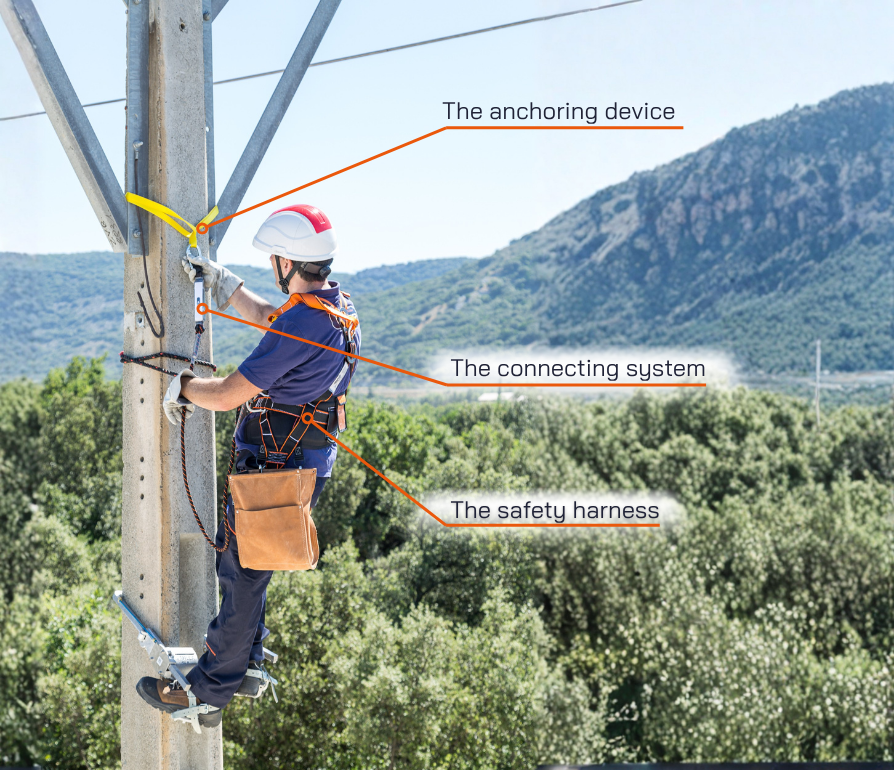
What is a fall arrest system ? PPE against falls from height is a device intended to be worn by a person to protect oneself against the risks of falling. A complete fall arrest system consists of three inseparable elements :
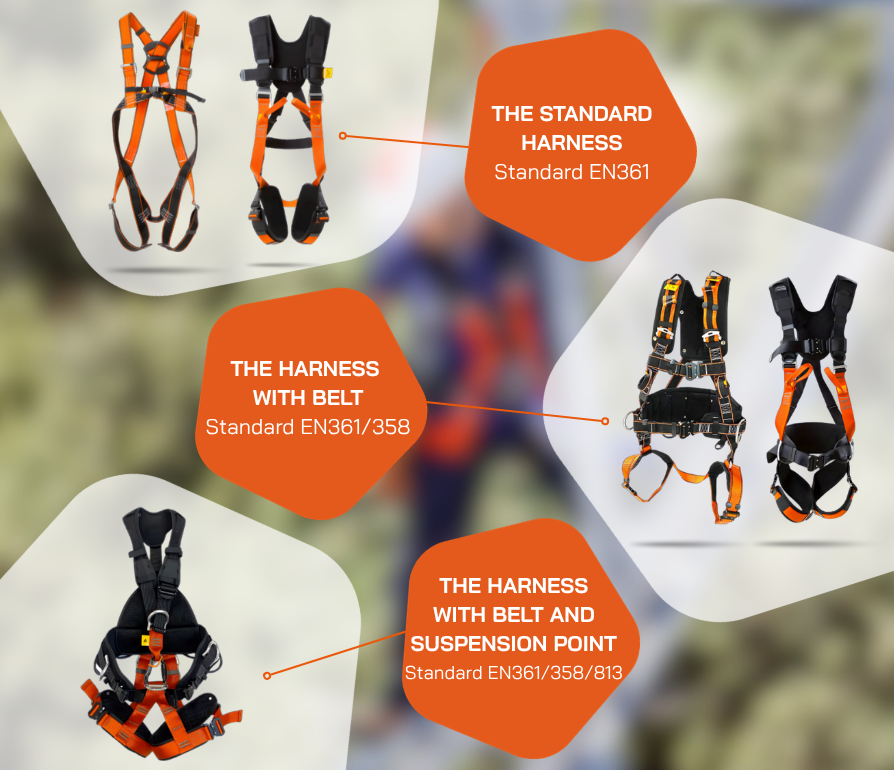
The harness is the only body-holding device permitted in a fall arrest system. Its role is crucial : it distributes the forces generated by the fall arrest over the whole body (thighs, pelvis, torso) in order to limit injuries. The choice of harness depends directly on the nature of the work to be carried out.
The basic Harness
The Harness with Belt
The Harness with Belt and Suspension Point
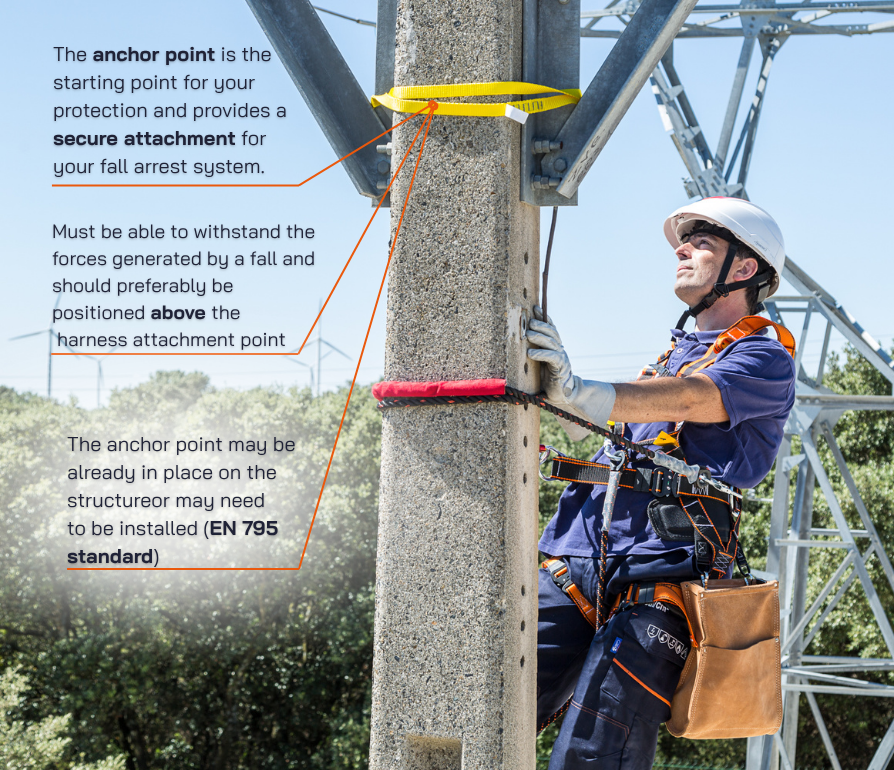
The true starting point of your protection, the anchoring device is the secure attachment of your fall arrest system. Whether structural or installed manually, this anchor point must always comply with the EN 795 standard.
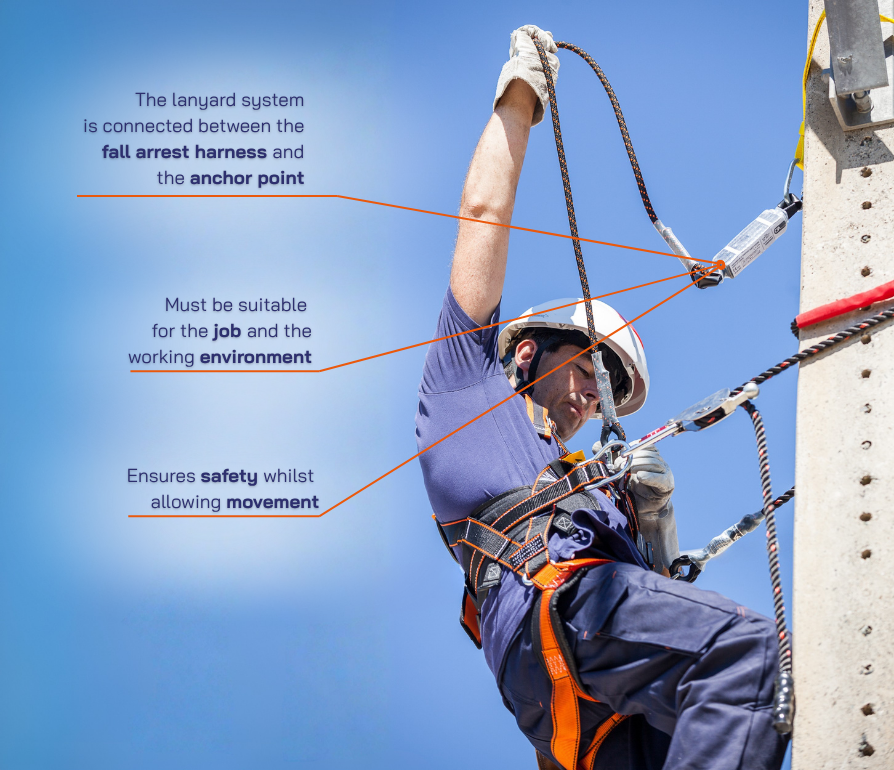
The connecting system links the full body harness to the anchoring device to stop a fall. It fulfils two essential missions : ensuring the operator's safety and maintaining the ease of movement necessary to complete their task.
At Penta Electrical Safety Products, we offer 3 types of connecting systems, to be chosen according to your environment :
It is common to confuse these two intervention techniques. However, they rely on very different physical approaches and equipment :
Work Positioning
Suspension Work