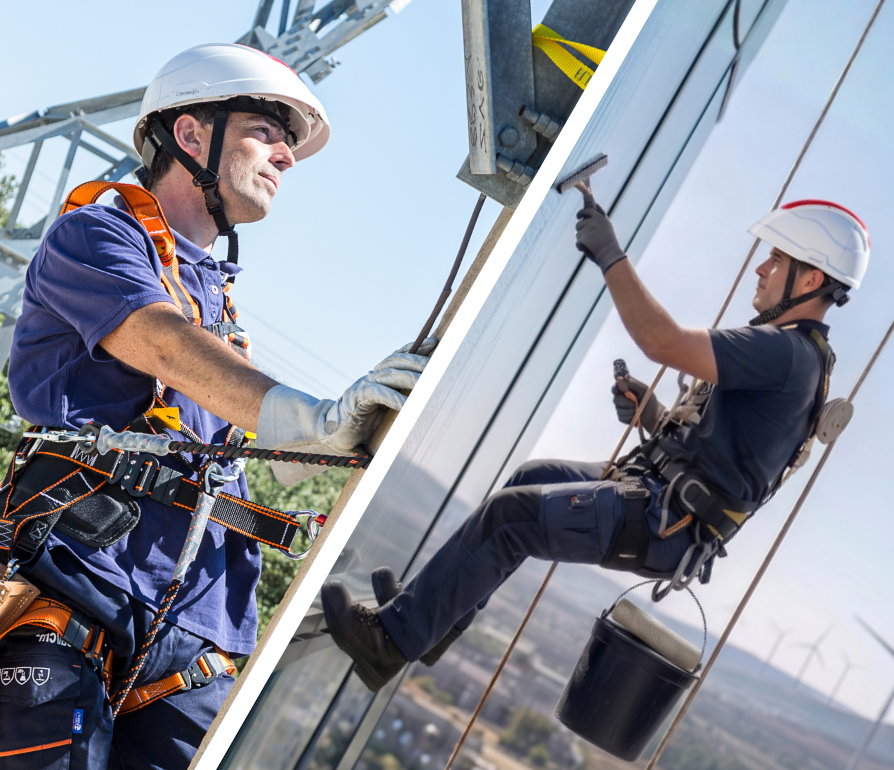
How to work at heights ?

Working at height: understanding the regulations, choosing the right PPE and ensuring safety during operations.

Reminder on working at heights and presentation of the fall arrest system

Before gearing up, it is essential to recall the hierarchy of prevention measures for temporary working at heights. Safety is always considered in a strict order of priority :

  1. Collective protection as a priority : An appropriate work plan with equipment ensuring collective protection (guardrails, safety nets, scaffolding or MEWPs/aerial work platforms) must always be prioritised.
     
  2. Personal protection as a last resort : Personal Protective Equipment (PPE) against falls from height must only be used when collective protection devices are impossible to implement.

Access rules and working conditions : Work stations at heights must be safely accessible. The means of access must take into account the frequency of passage, the height and the duration of the intervention. It must guarantee suitable ergonomics, allow for the rapid rescue of a worker in difficulty and ensure their evacuation. 

Reminder on working at heights and presentation of the fall arrest system

Warning : It is strictly forbidden to work at heights if the weather or environmental conditions compromise safety. Any intervention must be preceded by a risk assessment (electrical, mechanical, etc.) and the total securing of the work area. 
 

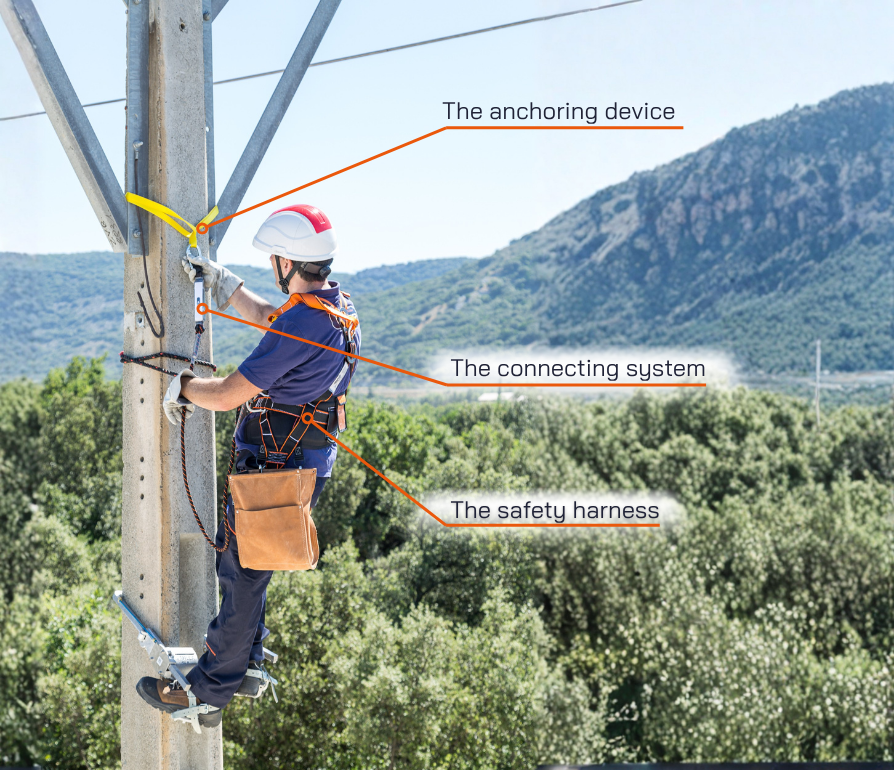
What is a fall arrest system ? PPE against falls from height is a device intended to be worn by a person to protect oneself against the risks of falling. A complete fall arrest system consists of three inseparable elements :

  • The full body harness
  • The anchoring device (and its connectors)
  • The connecting system

Our Harnesses and their uses

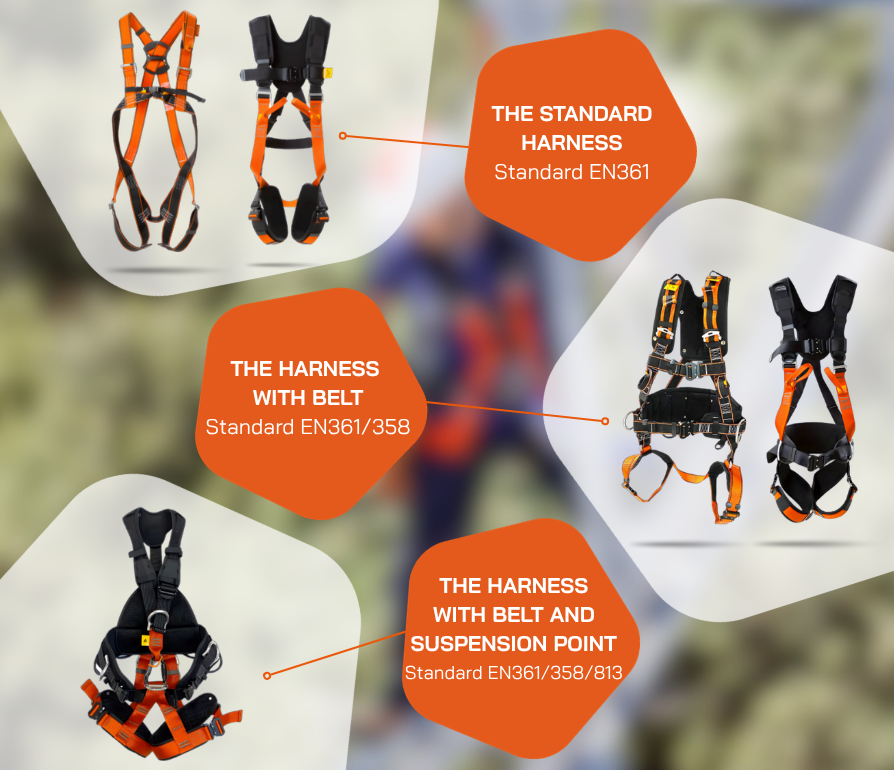
The harness is the only body-holding device permitted in a fall arrest system. Its role is crucial : it distributes the forces generated by the fall arrest over the whole body (thighs, pelvis, torso) in order to limit injuries. The choice of harness depends directly on the nature of the work to be carried out. 

The basic Harness

  • Use : To be prioritised as soon as there is a risk of falling, generally during interventions on a MEWP, roof or secured work platform.
  • Specifics : It is designed for tasks that do not require work positioning or suspension. It is equipped with attachment points (dorsal and/or sternal). The most advanced models feature quick-release buckles for easy adjustment. 
Our Harnesses and their uses

The Harness with Belt

  • Use : Meets the needs of "work positioning". Ideal for interventions at heights that require remaining in a static position.
  • Specifics : It allows the operator to have their hands free to work, even if they do not have their feet resting on a standard platform. The integrated belt, sometimes rotatable, offers excellent comfort for positioning. 

The Harness with Belt and Suspension Point

  • Use : Designed for rope access work requiring high mobility.
  • Specifics : This is the harness for rope access technicians and professionals working in suspension (like window cleaners). It combines work positioning, fall arrest and a ventral attachment point for descending or ascending on a rope.

Anchoring devices and connectors

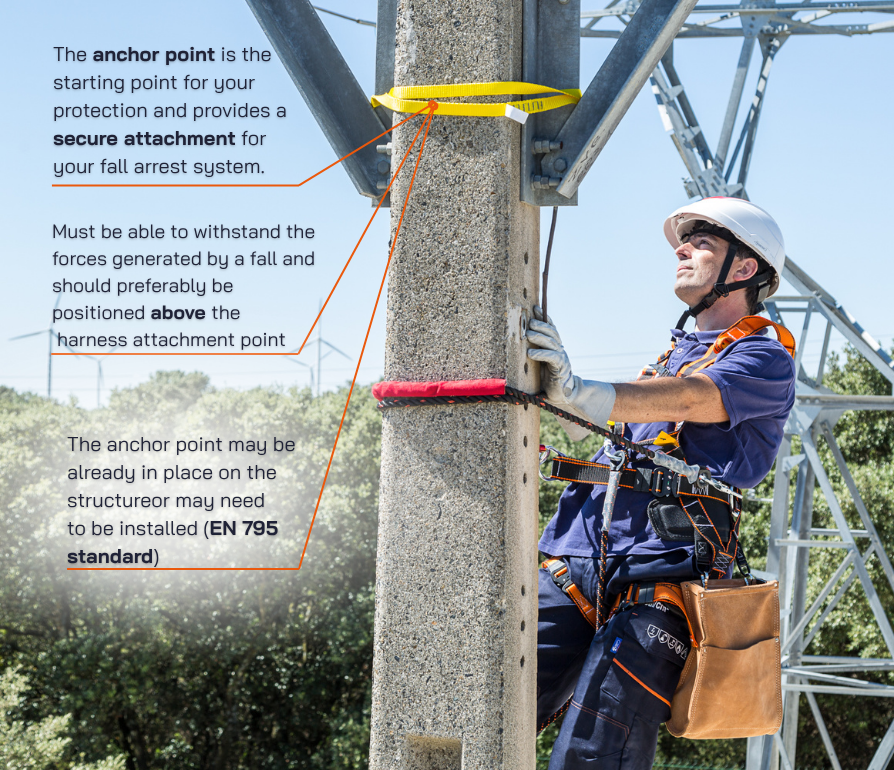
The true starting point of your protection, the anchoring device is the secure attachment of your fall arrest system. Whether structural or installed manually, this anchor point must always comply with the EN 795 standard.

Anchoring devices and connectors
  • Resistance and positioning : An anchoring device must be able to withstand the extreme forces generated by a fall. To reduce the fall distance and severity (the fall factor), it should ideally be placed above the user's harness attachment point.
     
  • Adaptability : Your environment dictates your equipment. The choice of anchoring device and connector must strictly match the material (concrete, steel, wood) and the exact dimensions of the receiving structure.
     
  • Standard : Two situations arise in the field : either the anchor point is already integrated into the structure, or it must be specially created for the intervention. In both cases (temporary or permanent anchoring device), the device must obligatorily meet the requirements of the EN 795 standard. 

Connecting systems

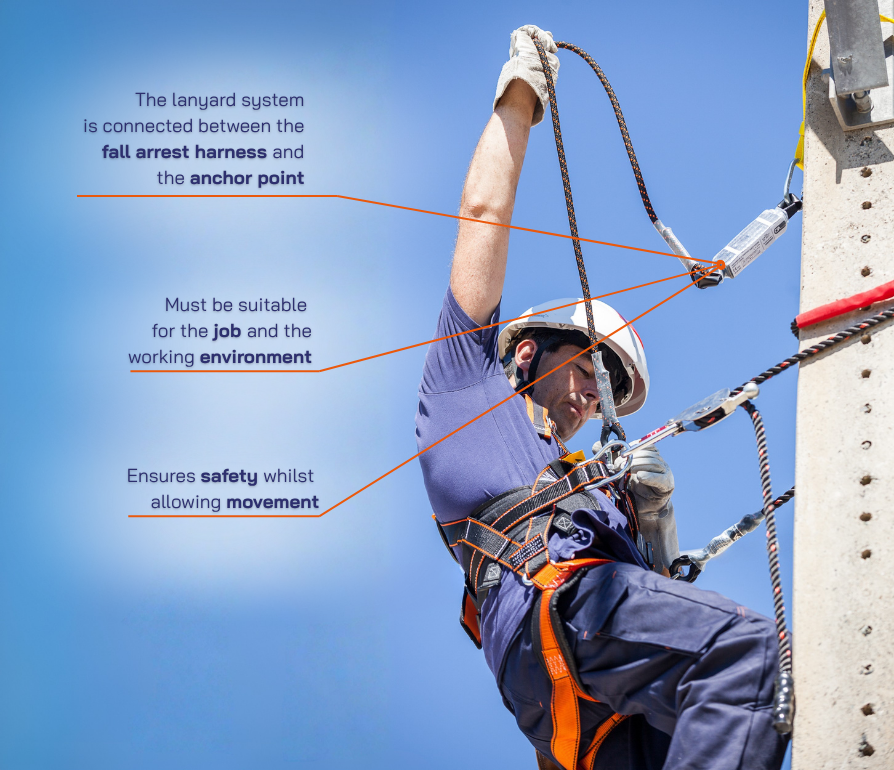
The connecting system links the full body harness to the anchoring device to stop a fall. It fulfils two essential missions : ensuring the operator's safety and maintaining the ease of movement necessary to complete their task. 

At Penta Electrical Safety Products, we offer 3 types of connecting systems, to be chosen according to your environment :

Connecting systems
Connecting systems
  1. The lanyard with energy absorber : Ideal for short movements, (limited to 2 metres), the absorber tears in the event of a fall to dissipate the kinetic energy.
     
  2. The guided type fall arrester including an anchor line : Perfect for vertical movements or on an inclined plane (on rope, cable or rail), it follows the user and blocks instantly in the event of a fall.
     
  3. The retractable type fall arrester : Offers great freedom of movement. The cable or webbing extracts and retracts automatically, maintaining constant tension. In the event of a fall, the system blocks instantly.

Telling the difference between work positioning and suspension work

It is common to confuse these two intervention techniques. However, they rely on very different physical approaches and equipment : 

Work Positioning

  • The principle : The worker carries out a static task. They are leaning around a structure (pole, pylon, framework) but are not on a platform.
  • The objective : To allow the professional to free both hands to work while remaining secured.
  • The equipment : Requires a harness with a belt and a work positioning lanyard. The body weight is supported by the belt and the feet are resting on the structure. 
Telling the difference between work positioning and suspension work

Suspension Work

  • The principle : The worker is literally hanging in mid-air, with no support for their feet.
  • The objective : To ensure high vertical and horizontal mobility in hard-to-reach areas (rope access work).
  • The equipment : Requires a harness with a belt and suspension point (ventral). The body weight is fully supported by the harness. This is the typical case of a window cleaner on a skyscraper.
Top of Page